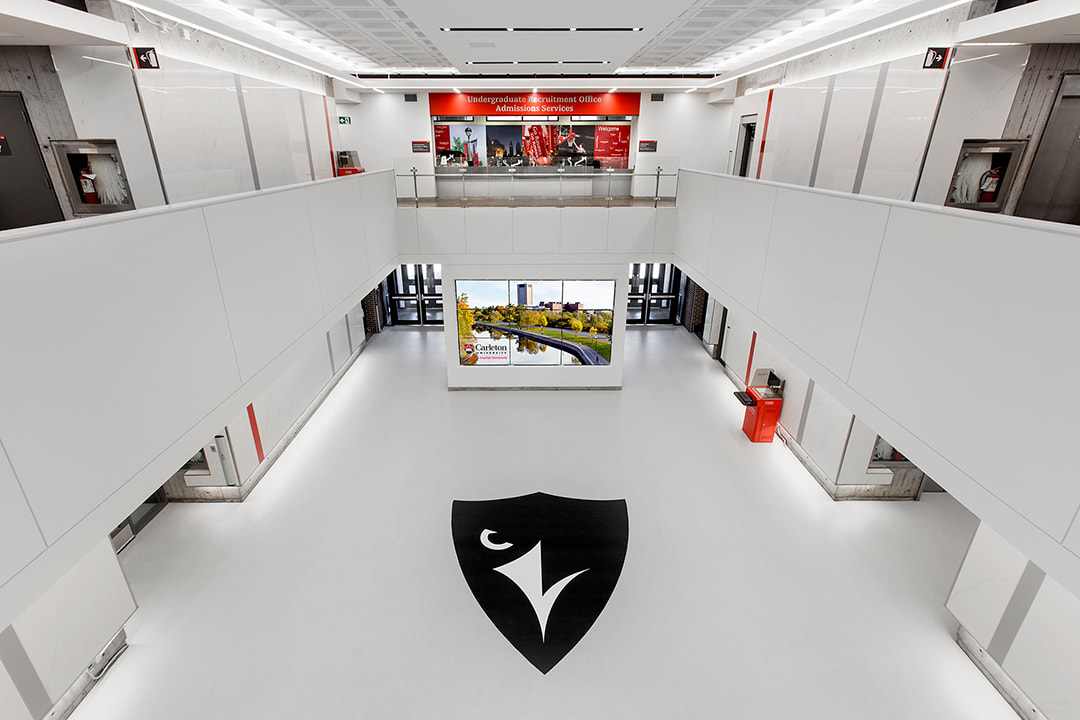
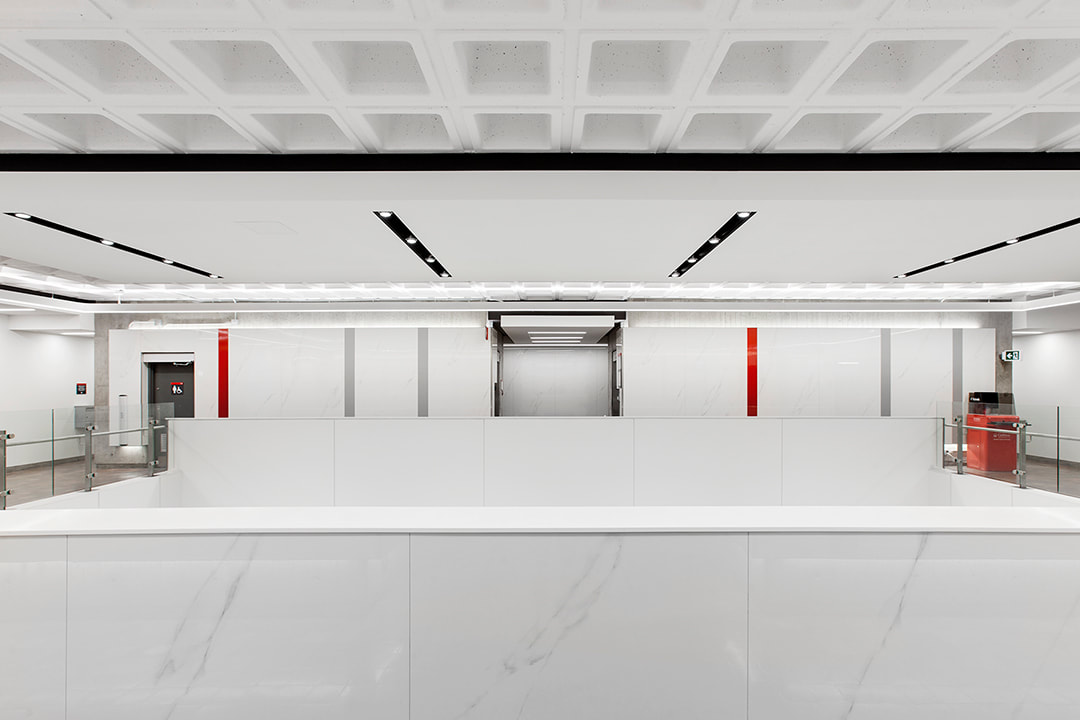
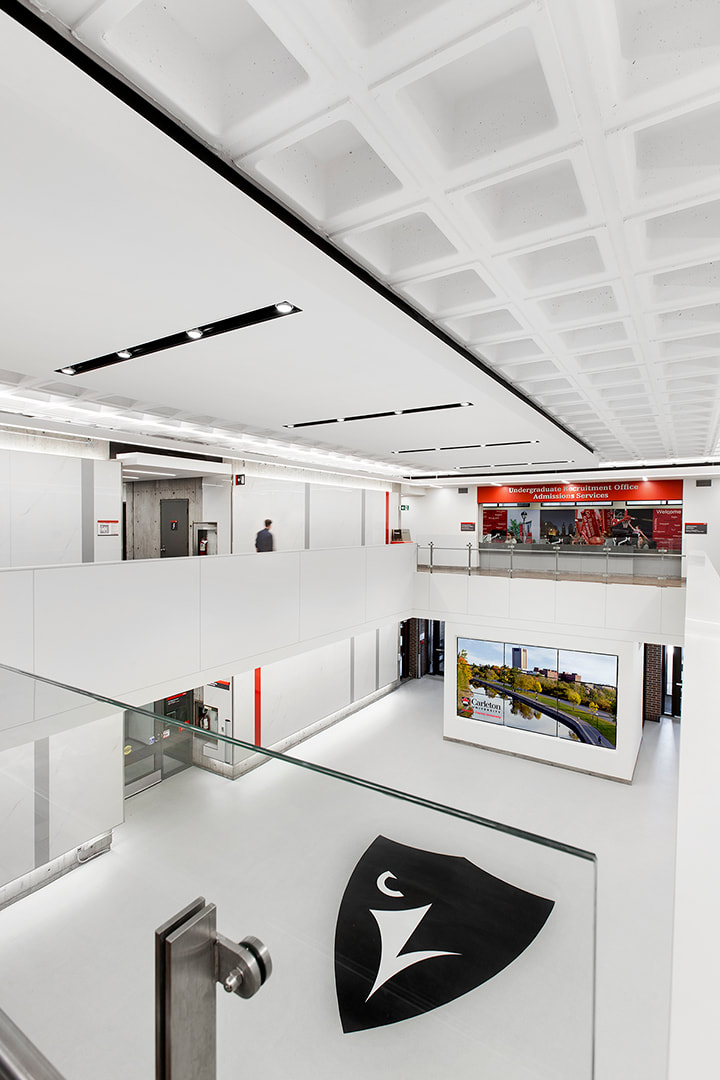
I've been hired to shoot the 2014 edition of Vancouver's Wallpaper* City Guide! I'll be photographing the cool spots all over the city, including but not limited to; hotels, restaurants, galleries, attractions and architecture, beaches and businesses. I'm looking forward to seeing my city from a tourists' point of view while getting some great shots of areas I've potentially never seen before. It'll be available on shelves and online January 2014 so watch for it in stores and tell your design conscious friends to pick up a copy if they're looking for places to visit while in the city! 1 Comment Public: Architecture + Communication hired me to shoot a few of their recently completed projects over the next few weeks so I thought I would post some of the images I shot of their installations at Telus World of Science. I had a fun time shooting YoTopo and the outdoor classroom located in the new Ken Spencer Science Park. Part of why I love architectural photography is that I get to see how people interact with the architecture, and it doesn't hurt that the weather was beautiful. If you're planning on checking out the next Pecha Kucha Vancouver at the Vogue Theatre on April 11th, one of the principals from Public, Brian Wakelin, will be presenting so you'll be able to see some of these images on the big screen. Writing about Toys (1992) has been on my "to do" list for ages so I recently re-watched it to get re-inspired. This is one of those movies that did poorly with critics and at the box office but is actually one that is visually distinct and has an opposing message and theme to what normally comes out of Hollywood. Directed by Barry Levinson (Rainman, Bugsy, Envy) and stars Robin Williams, Joan Cusack, LL Cool J, Robin Wright, Michael Gambon and Jamie Foxx' movie debut, the movie’s style and costumes are obviously influenced by the art of René Magritte. The story goes, Robin Williams helps run a toy factory, Zevo Toys, for his ailing father who then passes away, leaving control to his brother, Leland, who is a military man and will run a tight ship. Leland has little interest in the toy business until he learns about corporate espionage, then his military training kicks in. He decides to start producing war toys, something that Zevo has decidedly never done before. This is where the story shifts into a battle between good and evil. The military takeover starts off as covert operations, then suppresses the very thing that made Zevo special. Williams leads the crusade against his uncle for all that is innocent and whimsical while learning how to grow up a little to win the heart of his kindred spirit, Wright, who also works in the factory. The overall premise for the movie, I find to be insightful and adds to a larger conversation about consumption targeted towards children and how certain toys encourage violence, and how the isolation can lead to the desensitization of society when it comes to violence on a grander scale, i.e. war. As interesting as the ideas are behind the plot, the sets and costumes help tell the story and become their own characters that reflect the dichotomy of the situation. There’s a surreal, playful quality to the sets and the use of bold colours add to the fantasy of what working at a toy factory would be like. Conversely, the military influence uses camouflage, dark colours, shadows and extreme camera angles to reinforce the hostile takeover that sits on the horizon. Visually, this movie uses distinct architectural influences, in its use of scale in creating illusion and artistic elements when creating spatial experiences. It uses repetition, line, symmetry, positive and negative space to establish a sense of wonder. Screenshots: The genius of this film is that it addresses socio-political issues and consumerism; the very thing that keeps the military functioning at such a powerful level, and is illustrated using cartoonish visual effects that mask the severity of underlying real-world concerns. I recommend watching this movie for many reasons. I came across this video on Twitter a month ago, that details The Living Building Challenge, a sustainable building model for international architectural projects, and learned that the video qualifies as a semi-finalist in the Focus Forward Filmmaker Competition. I can see why. It's nicely shot, informative and helps promote innovative sustainable design. I've been following The Living Building Challenge since 2010, ever since my good friend, Tom Ngo and I won their design competition to design the award that is given to the projects that achieve various levels of certification status. It's pretty exciting knowing that the award we designed will be installed at sustainable projects all around the world. =) THE LIVING BUILDING CHALLENGE is a Semifinalist in the $200,000 FOCUS FORWARD Filmmaker Competition. View more Semifinalist films at vimeo.com/focusforwardfilms/semifinalists. Learn more about the Competition and FOCUS FORWARD at focusforwardfilms.com The Challenge: as we face imminent ecological collapse, visionary change agent Jason F. McLennan heads up a growing movement of deep-green design and inspires a revolution of humanity and heart. There's a small reception at the Staples House, one of West Vancouver's notable modern homes next weekend for the recent release of Selwyn Pullan's new book, Photographing Mid-Century West Coast Modernism. I had an opportunity to visit the Staples House in the spring to take some photographs and had a chance to talk with Kathleen Staples about art, architecture and photography, all my favourite things. It's always interesting to hear stories from people who have grown up in modern homes; it's a very different experience than with other dwelling styles. It's nice to hear such appreciation for modern architecture especially when it's so often overlooked or judged as cold and uninviting. I'm looking forward to hanging out in this house again and if I had a couple million dollars, I'd buy it, since it's up for sale. These videos are pretty fantastic. They make me nostalgic for an era gone by. The way these designs are presented not only remind us that life did not need to be complicated but still offered opportunity for innovation, but that vision always looked towards the future, or what the future was imagined as. It's interesting to see the birth of modern design in videos like these but it is also a double-edged sword in that it was also the birth of a hyper-consumerist culture which has led us to the problems we still face today. Arguably, design has become overly saturated by natural progression, it is proportional to the growing interest in profits and competition but also by more innocent motives, like basic improvements to objects that no longer fulfill an effective use. Adaptations will, no doubt, always be necessary, however, it is the excess in design strategies and convoluted ideas that have unfortunately bastardized an integral part of human efficiency to the point where thoughtful design solutions are too easily overlooked. As a result, the design process, from idea to physical object, is no longer respected as it once was. What I gather from my own research interests and design documentaries like these, is it seemed there were more risks being taken, more elaborate or philosophical concepts being explored in architecture, automobile design and everyday living inside the home. New materials, textiles and technologies were adopted to assist in the betterment of modern living, but we are learning today that these “new” innovations (ie plastics) are the major contributors to issues impacting contemporary life and health; our future, negatively. Perhaps it’s the Modernist in me, but I don’t necessarily think that all the stuff, things, junk, clutter, objects, etc need to be redesigned per se, but more importantly the materials used for manufacturing need to be improved to lessen the environmental impact of a grossly over-populated and still growing society. I'm excited that some of my photos for Picnurbia are included in Going Public published by Gestalten that is available in Europe and soon in the US. I can't wait for my copy to arrive in the mail! "Going Public showcases the creative revival of public space in our urban and rural landscapes. The book’s compelling selection of formal and informal interventions, reclamations, and architecture illustrates the current scope and interest in refashioning and repurposing our built environment for public use. The objectives of the featured examples are as diverse as the projects themselves and range from inspiring communication and community experience to devising new means of gathering in and connecting to nature. Ranging from bold to subtle and from temporary to permanent, the architecture and urban design featured in Going Public offers inspiring and surprising interpretations of our public surroundings and natural landscapes." I'm really excited to announce that 3 of my photos have been included in the recently released documentary Coast Modern. The world premiere was last night at the documentary film festival, DOXA, in Vancouver. I'm very pleased at how it turned out and how well it was received by the sold out audience. The film covers west coast modern homes in California, Oregon, Washington and Vancouver and we hear what Modernism means from well known architects, critics, writers, residents and artists. If you have an interest in documentaries, architecture, photography and the philosophy behind Modernism; in my opinion one of the most over-looked and underrated movements in architecture, I highly recommend finding out if this film is playing in a festival near you. You will not be disappointed. Check out the trailer below, it's been a long process to get this film released and it was worth the wait. Great work to everyone involved. Coast Modern Trailer from Coast Modern on Vimeo. The photos of mine that are included are with Julius Shulman's famous photographs in a short sequence about Case Study House No. 22 designed by Pierre Koenig in 1960. I photographed an apartment in the Laurier Building, one of three Beach Towers situated at 1600 Beach Ave between Cardero and Bidwell in Vancouver's west end. Later that day I found out there was a rezoning application to develop the surrounding open spaces to include four new buildings to densify the area further, completely altering the integrity of the original design. Below are a few exterior shots I took while there. From the Beach Towers website: The City of Vancouver has recognized Beach Towers as the finest example of Le Corbusier inspired ‘towers-in-the-park’ residential architecture in the city, listing it as Category A in the Post-1940s Heritage Register. Proposed redevelopment would destroy this landmark. Encompassing four high-rise towers, ranging in height from 19 to 21 stories, Beach Towers is located on Vancouver’s waterfront overlooking English Bay. Built in 1965 and 1968, they house over 1000 renters seeking views, sunlight, and ocean breezes. This award-winning, category A heritage site is threatened by a rezoning application seeking to build four buildings between and around the existing towers. This development will obliterate the open spaces integral to the original, Modernist-era site design. Learn more at www.beachtowers.ca and watch a video with the original project architect, Ojars Kalns Beach Towers at English Bay is a cherished Vancouver landmark that combines high density living with park-like surroundings and ocean views. Three additional buildings are planned for this over-developed block. What's in it for the community? Nothing. The development will: block views of English Bay, add hundred's to the West End's second most dense site, build modern buildings on a mid-century landmark, without reference to its award-winning design, and add luxury waterfront apartments to a neighbourhood that needs affordable housing. What's in it for the developer? $7 million more in annual rental revenue. Visit http://www.beachtowers.ca for more info I've been looking forward to Urbanized for a looong time. I really enjoyed Gary Huswit's last two films, Helvetica and Objectified, I'm just bummed there isn't a screening date scheduled for Vancouver. |


RSS Feed